
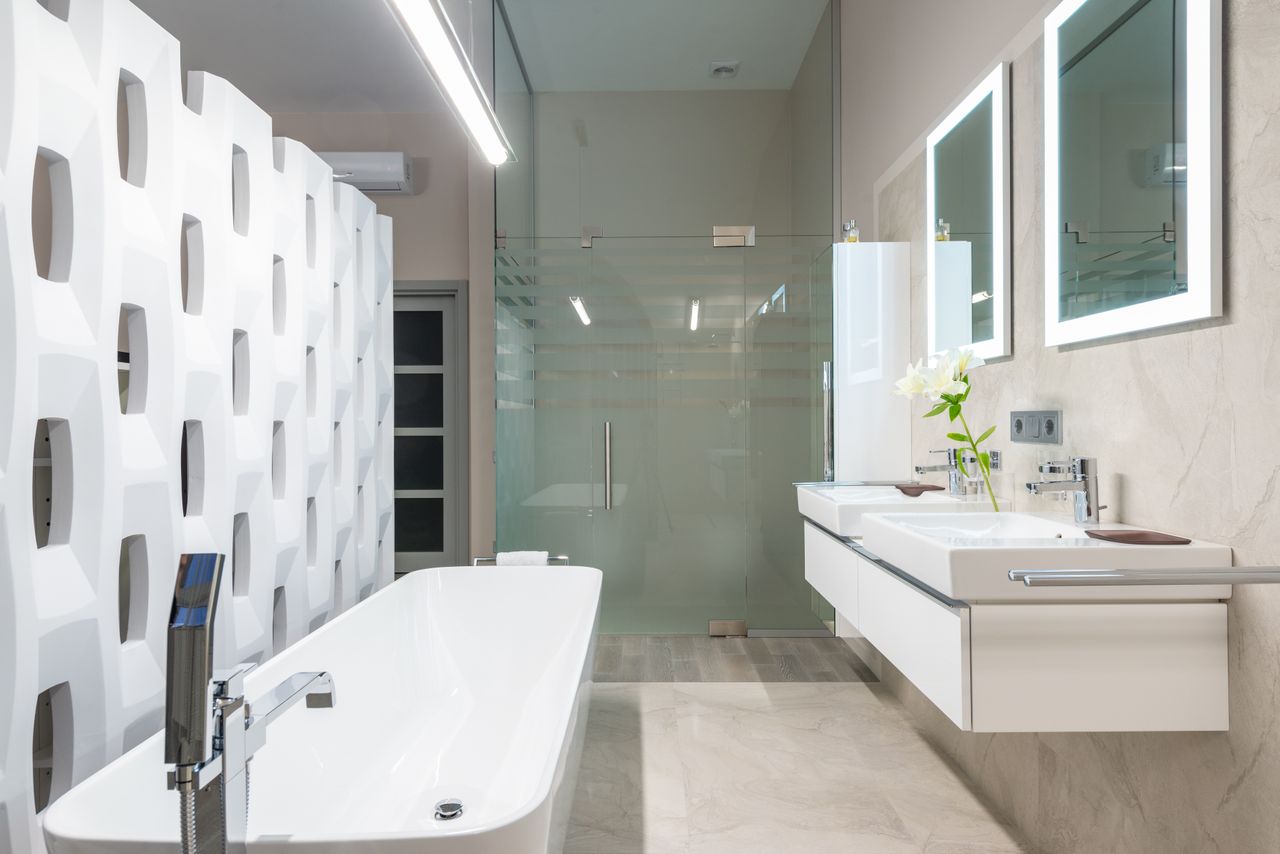
Nobody plans a bathroom remodeling project expecting it to go badly. And yet, ask around and you’ll find no shortage of horror stories, blown budgets, three-week jobs that stretched to three months, tile picked in a showroom that looked nothing like it did at home.
None of that is inevitable. Most bad bathroom renovations trace back to the same handful of avoidable decisions: skipping research, hiring on price alone, or starting demo before the design is actually finished. This guide walks through what a bathroom remodeling project really involves in 2026, cost, timeline, contractor selection, and the details most guides leave out.
In this guide:
- What counts as a remodel vs. a full reconstruction
- Real 2026 pricing for small jobs, full remodels, and specialty upgrades
- How to vet contractors before you sign anything
- The safety and sustainability angles most articles skip entirely
What Does “Bathroom Remodeling” Actually Include?
The term gets used loosely, so it’s worth being precise. Bathroom remodeling can mean anything from swapping a faucet to gutting a room down to the studs. Three tiers cover most real-world projects:
Cosmetic refresh. New vanity, fixtures, paint, lighting, maybe new flooring. No plumbing or layout changes. Fastest and cheapest way to modernize a tired space, and the tier most homeowners underestimate in terms of visual impact, a new vanity, updated lighting, and fresh paint can transform a room in a single weekend of work.
Full renovation. New tile, new shower or tub, updated plumbing fixtures, sometimes a layout tweak. This is what most people picture when they say “remodel.” It typically involves multiple trades, plumbers, electricians, tile setters, coordinated over several weeks, and it’s where most bathroom renovations actually land in terms of scope and cost.
Bathroom reconstruction. Structural or layout work, moving walls, relocating plumbing lines, converting a closet into a bathroom, or repairing water-damaged subfloor and framing discovered mid-project. Bathroom reconstruction is the most expensive tier because it touches things behind the walls, not just the surfaces you see, and it’s also the tier most likely to reveal costly surprises once demolition begins.
Knowing which tier your project actually falls into, before you get quotes, is the single biggest factor in getting an accurate estimate.
How Much Does Bathroom Remodeling Cost in 2026?
Pricing data varies by source and survey methodology, but a consistent picture of bathroom remodel cost emerges from national cost guides published this year.
| Project Type | Typical 2026 Range |
| Cosmetic refresh | $3,000 – $15,000 |
| Small bathroom remodel (under 50 sq. ft.) | $6,000 – $15,000 |
| Standard full bathroom renovation cost | $15,000 – $30,000 |
| Primary suite / luxury remodel | $40,000 – $80,000+ |
| National average, full remodel | roughly $12,000 – $16,500 |
Figures compiled from This Old House’s 2026 bathroom remodel data and Angi’s 2026 bathroom remodel cost guide, which each surveyed over 1,000 homeowners.
Per-square-foot, expect $120–$280 for mid-range work and up to $500+ for luxury finishes. The reason a small bathroom often costs more per square foot than a large one is simple: demolition, waterproofing, and plumbing setup cost roughly the same regardless of room size, so a tiny footprint doesn’t shrink those fixed costs proportionally.
Small Bathroom Remodel: Big Style, Small Footprint
A small bathroom remodel doesn’t have to feel small once it’s finished. A few moves consistently punch above their size:
- Large-format tile with minimal grout lines to reduce visual clutter
- A frameless glass shower instead of a curtain, to open sightlines
- Wall-mounted vanity to expose more floor
- A single accent wall instead of tiling every surface, to control cost
Powder rooms and guest baths tend to land at the low end of the small-bathroom range, often $4,500 to $8,500, since they skip a tub or shower entirely.
Bathroom Remodeling Trends Worth Knowing in 2026
Trends shouldn’t drive a remodel on their own, but they’re useful for spotting what tends to age well versus what tends to date a room quickly.
- Curbless, walk-in showers continue to dominate requests, driven equally by aesthetics and accessibility, a shower remodel built curbless now avoids a costly retrofit later
- Warm, textured materials (fluted cabinetry, matte finishes, warm wood tones) are replacing the all-white, all-gray palettes that dominated the last decade
- Freestanding tubs remain popular in primary suites even as walk-in showers dominate secondary bathrooms, the two aren’t mutually exclusive in a larger layout
- Smart fixtures, digital shower valves, heated floors on timers, lighted mirrors with defoggers, are increasingly requested even in mid-range budgets, not just luxury ones
- Zero-threshold, universal design details (wider doorways, blocking in walls for future grab bars) are being requested proactively by younger homeowners planning to stay long-term, not just by those remodeling for aging parents
The throughline across nearly all of these: durability and long-term usability are outranking short-term trend-chasing, which tracks with how long most people now stay in a home before their next bathroom remodeling project.
Do You Need a Permit for Bathroom Remodeling?
In most municipalities, yes, if the project involves plumbing, electrical, or structural changes. A cosmetic refresh (paint, a new vanity, swapped fixtures using existing plumbing) often doesn’t require one. A tub to shower conversion, a moved drain line, or any bathroom reconstruction almost always does.
Skipping a required permit is a common shortcut some contractors offer to “save time,” but it creates real risk: unpermitted work can complicate a future home sale, void portions of a homeowners insurance claim if something goes wrong later, and in some cases must be redone to code before a sale can close. A reputable contractor pulls permits as a matter of course and builds the cost and timeline into your estimate upfront, rather than treating it as an unwelcome surprise mid-project.
Shower Remodel vs. Tub-to-Shower Conversion: Which Is Right for You?
This is one of the most common forks in the road, and the right answer depends on your household, not just your taste.
Shower Remodel
A shower remodel replaces or upgrades an existing shower, new pan, tile, glass, and fixtures, without changing what the space is used for. This is the simpler, generally less expensive path when you already have a shower and just want it modernized.
Tub-to-Shower Conversion
A tub to shower conversion (also called a bathtub to shower conversion) removes a bathtub entirely and replaces it with a walk-in shower. It’s one of the most requested upgrades in bathrooms nationwide, largely for accessibility and space reasons, a tub takes up square footage a curbless shower doesn’t need.
According to This Old House’s 2026 pricing data, a tub to shower conversion typically runs $2,000 to $12,000, with prefab kits at the low end and fully tiled, frameless-glass walk-ins at the high end. Removing an old tub can also expose issues you didn’t know you had, soft subfloor, hidden moisture, or outdated plumbing that no longer meets code, which is why experienced contractors always build in a contingency for a bathtub to shower conversion rather than quoting the bare minimum.
If you’re weighing a full bathroom remodel bathtub replacement against a conversion, ask yourself one practical question: will this bathroom need to work for aging family members in the next 10 years? If yes, the conversion usually wins.
The Jacuzzi Bath Remodel: Luxury, Cost & What to Know
Not every bathroom is trending toward showers. A jacuzzi bath remodel, installing a whirlpool or jetted tub, remains a popular choice for primary suites, especially where relaxation matters more than accessibility.
Jacuzzi bath remodel cost in 2026 typically runs from about $11,000 for a straightforward tub swap up to $15,000–$20,000 once surrounding tile, plumbing, and electrical work (jetted tubs need a dedicated GFCI circuit) are factored in, according to This Old House’s jacuzzi remodel pricing. Labor alone for a straight tub-for-tub swap runs $1,000–$3,000; costs climb quickly if the new tub requires floor reinforcement for weight, or if plumbing needs to move.
A few things to weigh before committing to a jacuzzi bath remodel: jetted tubs use more water and energy to fill and heat, they take longer to clean thoroughly (jet lines can harbor buildup if not maintained), and they don’t universally boost resale value, some buyers actively prefer a walk-in shower instead. None of that makes it the wrong choice; it just means the decision should be about how you’ll use the space, not how it will show in a listing photo five years from now.
Finding the Right Bathroom Remodel Contractors
This decision affects your outcome more than any tile choice or fixture brand ever will. Choosing among bathroom remodel contractors is where most projects actually succeed or fail, not in the design phase. Not all bathroom remodel companies operate at the same standard, and the cheapest quote is rarely the safest one.
What to verify before hiring:
- Active license and insurance — ask for the license number and confirm it independently
- Portfolio of similar projects — a company that mostly does kitchens may not be the right fit for a complex bathroom reconstruction
- Written, itemized estimates — vague one-line quotes are a red flag
- References you can actually call — not just star ratings
- A clear payment schedule — tied to project milestones, not front-loaded
If you’re comparing bathroom remodel contractors near me, resist the urge to hire the fastest available crew purely for speed. The best remodeling bathroom contractors are often booked several weeks out, that backlog is frequently a sign of demand, not a red flag.
When homeowners search “bathroom remodel near me” or “bathroom renovations near me,” they’re usually comparing a mix of large franchises and independent local crews. Both can do excellent work; the differentiator is process, not size. Ask each of the bathroom renovation contractors you’re considering how they handle unexpected issues (like discovering rot behind an old tub), their answer tells you more about reliability than their showroom does.
Questions to Ask Before You Sign a Contract
- What’s included in this price, specifically?
- Who pulls the permits, and is that cost separate?
- What happens if you find water damage or structural issues once demo starts?
- What’s the payment schedule, and what triggers each payment?
- Who’s actually on-site day to day, is it your crew or subcontractors?
A contractor who answers these clearly, without hesitation, is usually the one worth hiring.
The Bathroom Remodeling Process, Week by Week
Most bathroom renovations follow a predictable arc, even though total time varies with scope.
| Phase | Typical Timing |
| Design, material selection, permitting | 2–4 weeks before work starts |
| Demolition | 1–3 days |
| Plumbing and electrical rough-in | 2–4 days |
| Tile, waterproofing, and drywall | 1–2 weeks |
| Fixtures, vanity, and finish work | 3–5 days |
| Final walkthrough and punch list | 1–2 days |
A cosmetic refresh can wrap in under two weeks. A full bathroom renovation typically runs 3–6 weeks once work begins. A bathroom reconstruction involving layout changes can stretch past that, particularly if permitting or inspections introduce delays outside the contractor’s control.
The Safety Angle Most Guides Skip: Bathrooms and Falls
Cost and style dominate most bathroom remodeling content. Health and safety rarely come up, which is strange, given the data.
Falls are a leading cause of injury among older adults, and the CDC reports that more than one in four adults 65 and older falls each year, with millions treated in emergency departments annually. Multiple independent studies point to bathrooms specifically as the highest-risk room in the house for these falls, largely due to wet, hard surfaces and the physical demands of getting in and out of a tub. This is exactly why a tub to shower conversion is often framed as a safety upgrade, not just a style choice, in homes with aging residents, and why grab bars, non-slip flooring, and curbless shower entries are increasingly standard requests rather than niche add-ons reserved for accessible-design specialists.
Building these features in during a planned remodel costs far less than retrofitting them later, after a fall has already happened.
The Sustainability Angle: Water-Efficient Bathroom Remodeling
Here’s a second gap in most bathroom remodeling content: almost nobody mentions water use, even though the bathroom is where most indoor household water gets used.
The EPA’s WaterSense program certifies faucets, showerheads, and toilets that use at least 20% less water than standard fixtures while maintaining performance, WaterSense-labeled faucets, for instance, run about 30% more efficiently than conventional ones. Specifying WaterSense-certified fixtures during a remodel is one of the easiest ways to lower long-term utility bills without touching the design plan at all. It’s a small line item during a renovation and a real difference on water bills for as long as you own the home.
Bathroom Remodel ROI: Is It Worth It?
Mid-range bathroom renovations recoup roughly 60–70% of their cost at resale, according to industry benchmarks tracked in Remodeling Magazine’s annual Cost vs. Value research, while upscale primary-suite remodels typically recover less, often 30–50%, since luxury finishes rarely translate dollar-for-dollar in a sale.
That gap isn’t a reason to avoid upgrading. It’s a reason to separate two different questions: what will this recoup if I sell, and what will this be worth to me while I live here? A family staying in a home for another decade gets a decade of daily value from a better bathroom, value a resale percentage doesn’t capture.
Materials That Age Well (and Ones That Don’t)
Material choice affects both budget and how long a remodel looks fresh.
- Porcelain tile outperforms ceramic in wet, high-traffic bathrooms and resists chipping better over time
- Quartz countertops hold up to daily moisture better than natural marble, which requires regular sealing to avoid staining
- Acrylic and fiberglass tub/shower surrounds cost less upfront than tile but can look dated faster and are harder to repair if damaged
- Solid, moisture-resistant cabinetry (rather than particleboard) resists warping in a room that sees daily humidity swings
- Matte finishes on fixtures show water spots less than polished chrome, a small detail that affects daily maintenance more than most homeowners expect
None of these are universal rules, budget, climate, and personal taste all matter, but they’re the questions worth asking before finalizing a materials list, not after installation.
Common Bathroom Remodeling Mistakes to Avoid
- Skipping ventilation upgrades. New tile and paint won’t fix a bathroom that stays humid, poor ventilation invites mold regardless of how new everything looks, and it’s one of the cheapest fixes to build into a plan from day one.
- Choosing tile before checking lead times. Popular tile can be back-ordered for weeks, stalling an otherwise on-schedule job. Confirm availability before demolition starts, not after.
- Underestimating plumbing costs when moving fixtures. Relocating a toilet or shower drain is far more expensive than most homeowners expect, since it usually means opening the floor, not just the walls.
- Hiring based on the lowest bid alone. The gap between the cheapest and most expensive quote is often the gap in what’s actually included, permits, disposal, warranty, and contingency coverage all vary quietly between quotes that look similar on the surface.
- Not budgeting a contingency. Experts commonly recommend setting aside an extra 10–15% of your budget for surprises behind the walls, old pipes, hidden water damage, or code-required updates uncovered mid-demo.
- Making design decisions in isolation. Choosing tile, then vanity, then lighting as separate decisions, instead of as one cohesive plan, is a common reason finished bathrooms feel disjointed even when every individual piece was a reasonable choice.
- Assuming “renovation” and “remodel” guarantee the same scope. As covered below, the terms aren’t standardized, get the scope in writing regardless of which word a contractor uses.
Frequently Asked Questions
What’s the difference between bathroom remodeling and bathroom renovation? In practice, the terms are used interchangeably. Some contractors reserve “renovation” for projects that restore an existing layout and “remodeling” for projects that change it, but there’s no universal industry standard, always confirm scope in writing rather than relying on the word alone.
How much does a small bathroom remodel cost? A small bathroom remodel (under 50 square feet) typically runs $6,000 to $15,000 in 2026, with powder rooms often landing closer to $4,500–$8,500 since they skip a tub or shower.
How long does a full bathroom renovation take? Most full renovations take 3 to 6 weeks once work begins, not counting design and permitting time beforehand. A bathroom reconstruction involving structural or layout changes can take longer.
Is a tub-to-shower conversion a good investment? For most households, yes, a tub to shower conversion improves daily usability, supports aging in place, and typically costs less than a full renovation, while a walk-in shower remains a strong resale feature in most markets.
How do I find reliable bathroom remodel contractors near me? Verify licensing and insurance, ask for a portfolio of similar projects, request an itemized written estimate, and call at least two references directly. Comparing a few bathroom remodel companies before committing gives you real leverage on price and timeline.
Is a jacuzzi bath remodel worth the extra cost? It depends on how you’ll use the space. A jacuzzi bath remodel adds a relaxation feature many homeowners love daily, but it uses more water and energy and doesn’t universally add resale value the way a walk-in shower does.
Do I need a permit for bathroom remodeling? Usually, yes, if the project touches plumbing, electrical, or structural elements. Cosmetic-only updates using existing plumbing typically don’t require one, but a tub to shower conversion or any layout change almost always does, confirm with your contractor and local building department before work begins.
What’s the biggest bathroom remodeling mistake homeowners make? Hiring based on the lowest bid without confirming what’s actually included. Two quotes that look similar on price often differ significantly in permits, disposal fees, warranty coverage, and contingency planning, the details that determine whether a project stays on budget.
Ready to Start? Here’s Your Next Move
Bathroom remodeling rewards homeowners who plan before they demo. The projects that go smoothly almost always start the same way: a clear scope, an honest budget with room for surprises, and a contractor who answers hard questions before the contract is signed, not after.
Whether you’re weighing a small bathroom remodel, a full bathroom renovation, or a specialty upgrade like a jacuzzi bath remodel or a tub to shower conversion, the fastest way to a bathroom you’ll actually enjoy is starting with a real conversation, not a guess.
Request a free design consultation with the team at PKI Developments, we’ll walk your space, talk through real options, and give you a written estimate, not a ballpark guess.